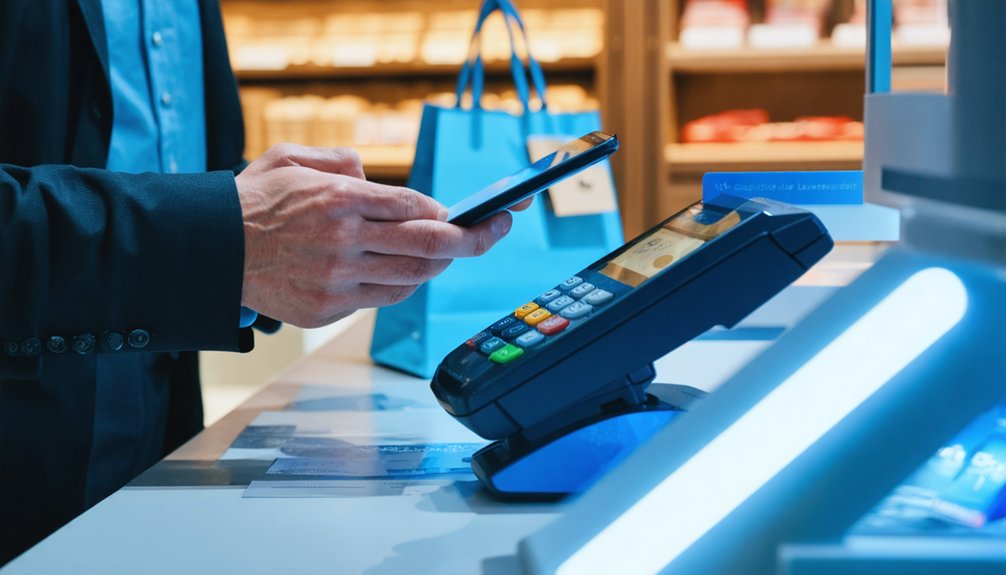

Buy Now, Pay Later splits your purchase into installments — often four equal payments over six weeks — with a merchant getting paid upfront while you repay over time. It’s fast, feels affordable, and usually carries zero interest. But missed payments trigger fees, autopay can cause overdrafts, and your credit score can take an unexpected hit. Understanding the full picture helps you decide whether BNPL is genuinely saving you money or quietly costing you more.
Key Takeaways
- BNPL splits purchases into typically four interest-free installments, with providers paying merchants upfront and collecting repayments automatically over six weeks.
- Missing a payment can trigger fees of $7–$15 and convert a 0% plan into an interest-bearing loan.
- Autopay creates overdraft risks; 31% of BNPL users incurred bank overdraft or NSF fees tied to automatic payments.
- Pay-in-four plans rarely affect credit scores, but reported missed payments can remain on credit files for up to seven years.
- Consistent on-time reported BNPL payments can raise credit scores by an average of 13 points, benefiting thin-file consumers most.
How Buy Now, Pay Later Actually Works
Buy Now, Pay Later works by splitting your purchase into fixed installments while a third-party provider pays the merchant upfront and collects your repayments over time. At checkout, you’ll see BNPL alongside cards and other payment options. You select it, submit basic details like your name, email, and date of birth, and receive an instant decision within seconds.
Once approved, the provider funds the merchant directly, typically within one to three business days, while your purchase converts into a structured loan with a defined repayment schedule. The most common model splits your total into four equal payments, with the first due immediately and three more spread over six weeks, automatically collected from your linked debit card, credit card, or bank account.
That instant decision is powered by a rapid underwriting process that pulls from bank account data, device signals, and credit bureau information to evaluate your application in 300–800 milliseconds.
The Real Cost of “Interest-Free” BNPL Plans
That 0% interest label looks clean and straightforward until you miss a payment. Suddenly, a $7–$15 late fee lands on a ~$25 installment, and what felt complimentary becomes surprisingly expensive. Annualize that fee against a six-week, $135 loan, and the effective APR rockets well past typical credit card rates.
About 10.5% of BNPL borrowers have faced at least one late fee, and 28% of those who missed payments also reported interest charges. Some providers quietly convert “interest-free” plans into interest-bearing ones after a missed payment.
Longer-term BNPL plans carry APRs of 10–36%, rivaling credit cards outright. The only truly zero-cost scenario is perfect, on-time repayment. Anything less, and the real cost reveals itself fast. Beyond the direct fees, autopay triggering overdrafts is a compounding hazard — CFPB data found that 31% of BNPL users were charged at least one overdraft or non-sufficient funds fee tied to automatic BNPL payments, adding another $25–$35 bank penalty on top of whatever the BNPL provider already charged.
Who Uses BNPL Most: and Why the Demographics Matter
Scroll through the data on who actually uses BNPL, and a clear portrait emerges: younger, financially stretched consumers carry a disproportionate share of the load.
Millennials represent nearly half of all users, Gen Z trails closely behind, and together they account for roughly 75% of the market. Women use BNPL more than men. Black and Hispanic adults adopt it at nearly twice the rate of White or Asian adults. Renters are 52% more likely to use it than homeowners.
These aren’t incidental patterns. About 58% of users say BNPL was the *only* way they could afford a purchase.
Nearly a third carry subprime credit scores or recent delinquencies. The product isn’t just convenient for these groups — for many, it’s a financial lifeline with real consequences attached. Among those earning under $50,000, 62% prefer BNPL over credit cards, compared to fewer than 40% of those earning $75,000 or more.
Where You Can Use BNPL Today
BNPL has expanded far beyond its origins in online fashion checkouts. Today, you can use it across e-commerce, physical retail, travel, utilities, and more.
Online, it’s embedded directly into checkout flows at fashion, electronics, and lifestyle retailers—with roughly 60% of transactions now under $100.
In-store adoption lags behind, with only about 18% of US retailers offering it at physical terminals, though major chains like Walmart, Target, and IKEA have integrated it through partners like Klarna.
Travel unleashes bigger purchasing power—some programs finance bookings up to $2,000 across four interest-free payments. Alternative Airlines connects you to installment plans across 650+ carriers.
BNPL is no longer just a luxury shortcut. It’s quietly reshaping how you pay for everyday life. Healthcare is one of the most compelling new frontiers, where medical care costs have risen over 114% in recent decades, making installment-based payment options increasingly essential for patients managing procedures, prescriptions, and services not covered by insurance.
Pay-in-4 vs. Long-Term BNPL Loans: Key Differences
From everyday groceries to international flights, BNPL has quietly woven itself into how you spend. But not all BNPL products work the same way, and confusing them could cost you.
Pay-in-4 plans split purchases—typically $50–$1,000—into four equal payments over six weeks. They’re usually interest-free, require no hard credit check, and don’t appear on your credit report.
Long-term BNPL loans are a different animal. Structured over 6–48 months with APRs reaching 36.99%, they can generate over $1,000 in interest on a single purchase. They often involve hard credit inquiries and may appear on your credit file as installment tradelines.
Knowing the difference isn’t just financial literacy—it’s financial power. The wrong choice can quietly drain your wallet and complicate future borrowing. In 2025, the BNPL market reached close to $160 billion in estimated originations, underscoring just how many consumers are now navigating these choices.
How BNPL Approvals Work Without a Hard Credit Check
When you apply for a BNPL plan, the approval process doesn’t hinge on a traditional hard credit pull. Instead, providers use soft inquiries that leave your credit score untouched and invisible to future lenders. They’re verifying your identity through your name, address, date of birth, and phone number, then running that data through proprietary risk models within seconds.
These models pull real-time signals: your bank account activity, available balance, spending patterns, and even behavioral cues like device consistency. If you’ve used the platform before, your repayment history carries significant weight. Your approval isn’t charity — it’s a calculated decision made in milliseconds.
Because installment amounts are small and automatically charged to your linked card, providers need far less data than traditional lenders. The system is built for speed, not bureaucracy. First-time per-transaction limits commonly start between $50 and $250, giving new users a controlled entry point before trust is established through consistent repayment.
BNPL Late Payment and Default Rates by the Numbers
Late payments on BNPL plans are more common than most users realize — and the numbers have been climbing steadily. A 2026 LendingTree survey found that 47% of BNPL users reported at least one late payment in the past year, up from 34% in 2024. That’s nearly half of all users falling behind.
Yet here’s what’s striking: hard defaults tell a different story. Actual charge-off rates dropped to 1.83% in 2023, down from 2.63% in 2022. That gap between self-reported late payments and true defaults suggests many users catch up before loans go terminal.
Still, don’t mistake low default rates for low risk. Late fees, typically ranging from $2 to $17 per missed installment, add up quickly — and financial stress accumulates long before a loan officially defaults. When late fees do hit, however, borrowers have meaningful leverage: 90% of users who asked to have a BNPL late fee waived successfully got it reduced or eliminated entirely.
How New Credit Reporting Rules Are Changing BNPL
Until recently, BNPL debt was largely invisible to the financial system — you could carry multiple active plans across different providers, and none of it would show up in a standard credit check. That’s changing fast.
Equifax began accepting BNPL tradelines into core U.S. credit files in February 2022, requiring standardized Metro 2 formatting. TransUnion developed BNPL as a distinct account type with 77 BNPL-specific data attributes, though lender feeds currently exclude this data while consumer-facing reports already reflect it. Experian created a separate “Buy Now, Pay Later” account label, with lender visibility expanding as more providers furnish data.
These shifts mean your BNPL habits are becoming part of your permanent financial record — and lenders will eventually see all of it. For now, Equifax has suppressed BNPL installment tradelines from existing scoring models like FICO and VantageScore while it works with industry partners to test adjusted calculations.
Does BNPL Affect Your Credit Score?
The answer depends on whether your BNPL activity is ever reported to a credit bureau — and for most short-term plans, it isn’t. “Pay in four” arrangements typically bypass major bureaus entirely, leaving your score untouched.
But when reporting does happen, the stakes rise fast. Hard inquiries can shave roughly 5 points off your score.
A newly reported BNPL installment account averages a 3-point dip — though thin-file consumers can see drops closer to 9 points.
The upside is real, too. Consistent, on-time BNPL payments reported as tradelines can lift scores meaningfully. One Equifax study found an average 13-point increase — 21 points for thin-file consumers.
Miss payments, though, and delinquencies or collections can hit your score just as hard as any defaulted debt. Negative marks from missed payments can remain on your credit report for up to seven years.
Five Signs BNPL Is Straining Your Budget
Buy now, pay later is designed to feel manageable — small installments, no interest, no immediate sting. But that design can mask serious financial strain. Watch for these five warning signs:
You’re spending more than planned. BNPL reduces payment pain, making purchases feel cheaper than they are.
You’ve lost track of what you owe. Juggling three or more active plans signals dangerous debt-stacking.
You’re using it for groceries or utilities. That’s not convenience — that’s a structural income gap.
Your installments exceed 15% of your take-home pay. Regulatory data links this threshold to doubled missed-payment rates.
BNPL is competing with rent or credit card minimums. Once installments crowd out essentials, you’ve crossed from convenience into crisis. Late payments rose from 34% to 47% in just two years, a sharp climb that shows how quickly manageable plans can unravel into financial emergencies.
When BNPL Actually Makes Financial Sense
Not every BNPL transaction is a financial trap. Used strategically, it can actually work in your favor. If you’re carrying a balance on a card charging 21–24% APR, a zero-interest pay-in-4 plan is mathematically cheaper for that same purchase. When traditional credit is unavailable or priced at punishing rates, structured BNPL installments at 0% become your least-cost option.
Merchant-subsidized plans shift financing costs away from you entirely — merchants absorb 5–8% per transaction so you pay nothing extra. The structure also works when installments align with your regular income cycle, making repayment predictable rather than stressful. The key is intentionality: you’re financing a planned, necessary purchase at zero cost, not impulse-buying because the option exists.
BNPL debt levels, delinquency, and default rates remain lower than other consumer debt types, suggesting that disciplined use has so far kept most borrowers out of serious financial trouble.
How to Use BNPL Without Hurting Your Credit
Using BNPL without damaging your credit starts with understanding something most providers won’t tell you upfront: the rules are changing. New FICO models launching in fall 2025 will incorporate BNPL data, meaning your repayment behavior will soon carry real scoring consequences.
Pay every installment on time—payment history drives 35% of your FICO score, and missed payments can trigger collections. Limit how many loans you carry simultaneously; roughly 63% of BNPL borrowers juggle multiple loans, multiplying the risk of slipping up. Each new account also lowers your average account age, typically shaving 3–9 points off your score.
Keep your volume disciplined, your calendar alerts active, and your cash flow honest. Used strategically, BNPL won’t cost you your credit standing. Most standard four-payment BNPL products don’t report to credit bureaus, so timely payments on those loans typically won’t build your credit history either.
References
- https://www.chase.com/personal/credit-cards/education/credit-score/how-buy-now-pay-later-affects-credit-score
- https://www.consumerfinance.gov/ask-cfpb/will-a-buy-now-pay-later-bnpl-loan-impact-my-credit-scores-en-2117/
- https://www.cnbc.com/2025/06/25/buy-now-pay-later-plans-will-soon-impact-your-credit-score.html
- https://www.nasdaq.com/articles/how-buy-now-pay-later-services-can-help-or-hurt-your-credit-score
- https://www.fico.com/blogs/bnpl-credit-reports-how-could-data-impact-fico-scores
- https://www.philadelphiafed.org/-/media/frbp/assets/consumer-finance/discussion-papers/dp23-01.pdf
- https://www.bankrate.com/credit-cards/advice/buy-now-pay-later-credit-score/
- https://www.boh.com/blog/buy-now-pay-later-and-your-credit-score-what-the-2025-changes-mean-for-your-financial-future
- https://www.bostonfed.org/publications/current-policy-perspectives/2024/buy-now-pay-later-who-uses-it-why.aspx
- https://www.npr.org/2025/07/05/nx-s1-5448793/credit-score-fico-buy-now-pay-later-affirm-klarna