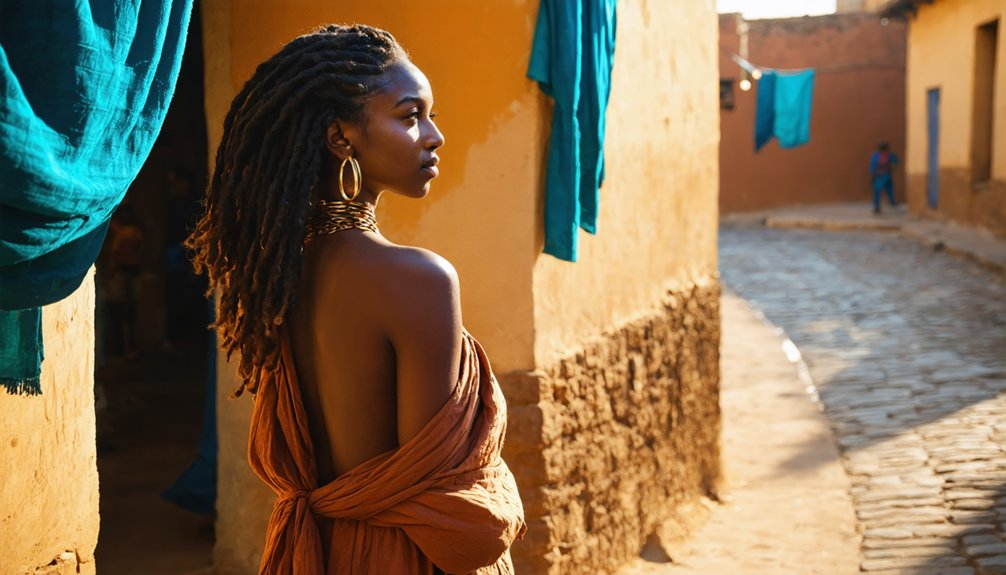

More Black women are traveling to ancestral homelands to reclaim identities that displacement deliberately erased. With 36% now preferring solo trips and nearly 50% prioritizing ancestry-linked destinations, this isn’t casual tourism — it’s intentional healing. Standing at sacred sites, hearing ancestral languages, and walking through historical rupture points triggers profound emotional transformation. Government-led programs like Ghana’s Year of Return and Sierra Leone’s citizenship pathways are making the journey more accessible than ever. Keep exploring to discover everything this movement holds.
Key Takeaways
- Black women are reclaiming erased ancestral identities by visiting sacred heritage sites, processing inherited trauma, and experiencing emotional transformation through roots travel.
- 70% of Black millennial women took multiple extended vacations within two years, with 65% motivated by a desire for independence.
- Majority-Black destinations offer relief from lifelong hyper-vigilance, genuine local hospitality, and a profound sense of belonging rarely experienced at home.
- Programs like Ghana’s Year of Return, Black Birthright, and curated sisterhood tours create structured pathways for ancestral reconnection and collective healing.
- Black women-led travel companies and digital platforms like OMNoire and Black Girls Travel Too are redefining heritage travel as entrepreneurship and cultural reclamation.
What’s Really Driving the Black Women’s Roots Travel Boom?
Black women aren’t just traveling more—they’re traveling with purpose. Nearly 50% of Black travelers now prioritize ancestry-linked destinations, 16% higher than the general population. That’s not coincidence. That’s intention.
You’re part of a generation that plans for this. Twenty-three percent of Black travelers maintain dedicated travel savings accounts, and you’re 36% more likely to use digital budgeting tools to make complex international trips financially viable. The average spend is projected to hit $2,992 per traveler in 2025.
And you’re going consistently. Research shows 70% of Black millennial women took multiple vacations of five or more days within a two-year period. Roots travel isn’t a trend you’re chasing—it’s a legacy you’re actively reclaiming. In 2023, Black leisure travelers collectively contributed $145 billion to the travel economy, signaling just how powerfully this community is shaping the industry.
Why Centuries of Displacement Make the Journey Back So Powerful
When nearly 12 million Africans were forcibly removed from their homelands between the 15th and 19th centuries, they didn’t just lose their geography—they lost their languages, spiritual systems, ethnic identities, and the living memory of where they came from.
That rupture didn’t end with emancipation. The Great Migration, the Exoduster movement, and continued displacement compounded the disconnection across generations. Today, the African diaspora spans every corner of the globe, with over 91 million people of African ancestry in Brazil alone.
The Psychological Healing That Happens Through Heritage Travel
That rupture—centuries deep and still echoing—doesn’t simply dissolve once you book a flight and land on ancestral soil. But something profound begins to shift.
Heritage travel works psychologically because it gives shape to what’s been formless—your grief, your disconnection, your inherited trauma. Researchers describe this as “postmemory,” the ancestral pain you carry without ever having lived it. When you walk through sacred spaces, hear your lineage’s language, or stand at sites where your people’s story was violently interrupted, you’re not just sightseeing. You’re metabolizing history.
Studies confirm it: travelers report emotional transformation, reduced alienation, and genuine healing. Black women, specifically, describe these journeys as reclaiming a dignified identity that displacement tried to erase. The journey doesn’t erase the wound—it finally names it. Researchers have also found that roots travel can disrupt familial practices of silence, unlocking suppressed family histories and inspiring subsequent generations to seek out and reconnect with their heritage.
Why Black Women Are Taking Solo Heritage Trips on Their Own Terms
For millions of Black women, solo heritage travel isn’t a trend—it’s a declaration. You’re choosing ancestry over itineraries built around others’ comfort. You’re choosing cultural continuity over compromise.
The numbers confirm what you already feel. Thirty-six percent of Black travelers now prefer solo trips—outpacing travel with friends or family. Black American leisure travelers spent $145 billion in 2023, and industry analysts credit Black women as the primary force behind that momentum.
Your motivations run deeper than tourism. Genealogical curiosity, cultural identity, and ancestral connection drive you toward Jamaica, Nigeria, Ghana, and beyond. You’re not waiting for a travel companion to validate the journey. You’ve decided that reconnecting with your roots belongs to you—and only you—to define. A recent survey of over 2,700 women found that desire for independence motivated 65% of respondents to travel alone—a feeling that resonates across cultures and borders.
How Ghana, Sierra Leone, and Benin Welcome Diaspora Travelers
Across West Africa, Ghana, Sierra Leone, and Benin have built formal frameworks that transform diaspora travel into something far more meaningful than tourism. Ghana’s 2019 Year of Return marked 400 years since Jamestown and drew 237,000 additional visitors, framing the journey as a birthright homecoming. Its follow-up initiative, Beyond the Return, launched a decade-long African Renaissance with seven pillars connecting heritage experiences, investment opportunities, and relocation pathways.
Sierra Leone extends citizenship and facilitated naturalization to diaspora members with verifiable ancestral ties, making return literal rather than symbolic. These governments aren’t simply welcoming you—they’re actively building infrastructure, policy, and ceremony around your arrival. Ghana’s Office of Diaspora Affairs worked alongside the tourism ministry and multiple organizations to coordinate the events and campaigns that made this movement possible. Coordinated government collaboration ensured that outreach extended to African diaspora communities across the Americas and beyond. When you step onto that soil, you’re not a tourist. You’re a descendant reclaiming something that was always yours.
What Does Detty December Actually Offer Beyond the Party?
When Ghana, Sierra Leone, and Benin built formal infrastructure around your arrival, they understood something that Detty December has quietly confirmed: returning isn’t a single act, it’s a season. The calendar runs deeper than nightlife.
You’ll find wellness activations offering pilates, cold plunges, and curated shopping from Ghanaian women-owned brands. You’ll attend naming ceremonies that formalize your ancestral reconnection. You’ll sit in panels on entrepreneurship, walk through royal palaces, and witness masquerader carnivals transforming city streets into living heritage.
Families cross continents for weddings, church services, and beach gatherings that anchor community across generations. Detty December doesn’t ask you to choose between celebration and intention. It holds both—creating space where your healing, your hustle, and your homecoming occupy the same sacred season. Brands like Hanahana Beauty and ONO are deepening that space, bringing sustainable, women-owned commerce into the heart of the season through pop-ups that center community investment alongside product.
The Delegations and Study Programs Taking Black Women Home
Beyond the seasonal gatherings and nightlife activations, a quieter and more structured form of return has taken root: delegations, birthright programs, and study journeys designed specifically to bring Black women—and the broader diaspora—home with intention.
Organizations like AAKEWO lead Kenya delegations centering ancestral exploration, womanist practice, and collective healing. Research confirms what participants already know: these journeys deepen spiritual connection, clarify purpose, and catalyze community-focused transformation.
Programs like Black Birthright and Birthright AFRICA extend access further. Whether you’re completing a year-long curriculum before landing in Ghana or traveling on a complimentary trip as a young adult, the framework is clear—education precedes arrival.
Advocacy delegations add another dimension. The 2025 Ghana Liberation Tour proved that returning home can also mean building policy that protects you.
Curated travel experiences like Beyond The Ideal’s Ghana 2026 trip offer another pathway, centering ancestral reconnection and sisterhood through immersive cultural encounters including a Ghanaian naming ceremony, a Door of No Return visit, and Kente weaving workshops in Kumasi.
The Black Women-Led Businesses Redefining Heritage Travel
Heritage travel has become serious business—and Black women are building it. From Chicago’s first African American-owned brick-and-mortar travel agency to Brazil’s most celebrated Black woman-owned travel company, entrepreneurs are designing journeys that center your history, your community, and your liberation.
Companies like Landtours Ghana, Cultural Heritage Alliance for Tourism, and Jelani Travel build immersive itineraries across Africa and the Caribbean, reconnecting diaspora travelers with ancestral roots. Underground Tours of Savannah, Black Heritage Tours Amsterdam, and Explore Jax Core unearth stories that mainstream tourism ignores. Platforms like OMNoire prioritize your wellness. Travel Divas and Black Girls Travel Too transform group travel into collective healing.
These aren’t just businesses—they’re movements. When you book with them, you’re not simply traveling. You’re investing in Black-led infrastructure built specifically to bring you home. Stephanie M. Jones founded the only Black-owned receptive tour operator in the United States, Cultural Heritage Alliance for Tourism, in Miami in 2016.
How Instagram Influencers Are Driving Black Roots Travel Culture
Scroll through any Black travel feed and you’ll quickly see how Instagram has transformed roots travel from a niche pursuit into a full-blown cultural movement. Influencers like Jessica Nabongo and Oneika Raymond aren’t just posting beautiful images — they’re dismantling the “white travel imaginary” by centering Black presence, melanated aesthetics, and cultural identity in spaces the mainstream industry has long ignored.
Through strategic image-caption-hashtag-geotag combinations, these digital culture bearers map African heritage sites, document diasporic routes, and construct visual itineraries that make roots travel feel accessible and necessary. Hashtags like #BlackTravel create searchable archives that connect you to communities, histories, and destinations. Platforms like Travel Noire and Nomadness Travel Tribe amplified this ecosystem further, turning individual inspiration into collective movement — because your liberation journey deserves both a roadmap and a community. The Black Travel Movement, which emerged in 2011, developed its collective identity around a Black travel injustice frame that directly challenged the underrepresentation of Black travelers within the mainstream travel industry.
Tools and Apps Making Black Roots Travel Easier
From GPS-enabled walking tours to diaspora networking platforms, a new generation of digital tools is rewriting the roots travel experience entirely. Apps like Black Diary 1887 guide you through historically Black neighborhoods across 30 U.S. cities and landmarks in Paris and Washington, D.C. The African American Sites app surfaces over 2,000 heritage locations across the United States. Green Book Global scores destinations through an inclusivity lens, functioning as your modern safety compass.
Xpat App connects you with Black expats and students building community abroad, while Noirbnb removes the discrimination risk from homesharing. ZaNiheza links you directly to Black-owned tour operators across Africa. These tools aren’t accessories — they’re infrastructure, designed to move you through the world with clarity, safety, and cultural intention.
For dining discoveries that deepen your cultural immersion, EatOkra features Black-owned restaurants and eateries to help you find authentic local flavors whether you’re exploring a new city or traveling abroad.
What Black Women Actually Experience When They Arrive
When you finally step onto the soil your ancestors were taken from, the body often responds before the mind catches up. Tears arrive without warning. Grief and joy occupy the same breath. At slave castles and Doors of No Return, something ancient in you recognizes the land.
Then something else shifts. In majority-Black spaces, the hyper-vigilance you’ve carried your entire life quietly dissolves. You exhale—sometimes for the first time. Strangers extend genuine hospitality. Local guides reframe histories you were taught incompletely.
What you’re building isn’t just a travel memory. It’s a revised identity—grounded, expansive, self-defined. You’re not simply visiting. You’re reclaiming a narrative that was interrupted generations ago, and your presence on that soil is the continuation. Research finds that these journeys rarely yield conclusive heritage findings, instead producing fleeting connections and small but meaningful spaces of belonging.
From One Trip to Permanent Roots: Why Some Are Staying
For many Black women, one trip becomes a reckoning. You land, exhale, and realize the weight you’ve carried your entire life isn’t yours to keep. That recognition changes everything.
The decision to stay isn’t impulsive. It’s calculated. You’re watching police kill Black people at home with impunity. You’re raising children in a country that doesn’t protect them. Ghana offers land ownership without discrimination, expanding markets, and real entrepreneurial possibility. You’re building generational wealth on your own terms.
There’s also something deeper at work. When Ghanaian leadership publicly invites the diaspora to come home, they’re naming what you already feel. The ancestral pull is real. And once you stop treating it as sentiment and start treating it as strategy, roots form fast. Some, like one woman who relocated after burnout in New York, found that Ghana’s pace and sense of belonging transformed not just her mental health but her entire entrepreneurial path.
References
- https://laccmibridge.fiu.edu/wp-content/uploads/2022/09/Black-Women-in-the-African-Diaspora-Seeking-Their-Cultural-Heritage-Through-Studying-Abroad.pdf
- https://colab.ws/articles/10.1016/j.annale.2025.100173
- https://www.tandfonline.com/doi/full/10.2202/1949-6605.1175
- https://thetraveldivas.com/black-history-month-destinations-every-black-woman-should-visit/
- https://aura.antioch.edu/etds/341/?tfa_187=microsoft-ad-ccg
- https://journals.sagepub.com/doi/10.1177/20563051221103843
- https://www.instagram.com/p/DWltu_iiNly/
- https://www.timeout.com/news/heritage-tourism-is-leading-to-an-african-travel-boom-heres-why-black-travellers-are-embracing-the-trend-031326
- https://scispace.com/pdf/back-to-africa-in-the-21st-century-the-cultural-reconnection-4zv34s8nvz.pdf
- https://www.cntraveller.com/article/meet-the-black-women-redefining-what-it-means-to-travel