
Third places — the cafés, parks, libraries, and corner spots that aren’t home or work — are essential to your health, happiness, and sense of belonging. Research links strong social ties to a 50% higher likelihood of survival, while loneliness raises mortality risk by 26%. Yet these spaces are vanishing fast, hit hardest in Black, Hispanic, and low-income communities. Understanding why they matter — and how to rebuild them — could change how you live.
Key Takeaways
- Third places—cafés, libraries, parks, and community centers—are neutral social spaces separate from home and work that foster belonging and conversation.
- Strong social ties boost survival likelihood by up to 91%, while loneliness and isolation significantly raise mortality and cardiovascular disease risk.
- Declining third places disproportionately affect Black, Hispanic, low-income, and rural communities, deepening social inequality and limiting access to connection.
- Even a single anchor third place measurably increases entrepreneurship, neighbor interaction, and local economic activity in underserved neighborhoods.
- Finding community starts with frequenting walkable, low-cost local spaces with consistent hours, familiar regulars, and low-pressure social environments.
What Is a Third Place?
The term “third place” was coined by American sociologist Ray Oldenburg in his 1989 book *The Great Good Place*, and it’s become one of the most useful frameworks for understanding how communities actually hold together.
Simply put, a third place is any social space that isn’t your home or your workplace. It’s the sphere where informal public life happens—where you show up voluntarily, without agenda or obligation.
Think of it as neutral ground. Nobody owns the dynamic, entry doesn’t require an invitation, and economic status shouldn’t be a barrier.
Conversation is the main currency. Third places thrive on regulars, familiarity, and a low-pressure atmosphere that lets you simply *be*. They’re where community stops being abstract and starts feeling real.
These spaces have appeared throughout human history, from the ancient Greek agora to the coffeehouses of 17th century England, suggesting that people have always needed somewhere between home and work to gather and connect.
The Real Health Benefits of Regular Third Place Visits
Spending time regularly in a third place isn’t just good for your mood—it may literally extend your life. Research across hundreds of thousands of participants links strong social integration to a 91% higher likelihood of survival. Loneliness, by contrast, raises mortality risk by 26%, while social isolation adds another 29%.
The stakes go beyond longevity. Social isolation rivals obesity and smoking as a cardiovascular risk factor, raising your coronary heart disease risk by 29% and stroke risk by 32%. Mentally, chronic loneliness accelerates depression, anxiety, and cognitive decline.
Third places interrupt these patterns. Regular, low-pressure face-to-face connection—at a café, library, or community club—mirrors the social integration that studies consistently associate with longer life, sharper minds, and healthier hearts. A meta-analytic review of 148 studies involving over 308,849 participants found that people with stronger social relationships had a 50% increased likelihood of survival compared to those with weaker social ties.
Why Third Places Are Disappearing Fast
Given how powerfully third places protect your health, their rapid disappearance isn’t just an inconvenience—it’s a public health crisis unfolding in slow motion.
Since the Great Recession, public recreation spots have fallen 18%, local food and beverage stores 23%, and small hobby shops 27%. Rising rents squeeze out low-margin cafés and bookstores. Zoning laws favor single-family sprawl over walkable, mixed-use neighborhoods where informal gathering naturally thrives.
Meanwhile, you’re spending 7–10 hours daily on screens, gradually replacing face-to-face connection with digital substitutes. Post-pandemic habits reinforced that drift.
Cultural shifts toward individualism and scheduled socializing have made spontaneous community feel foreign—even uncomfortable.
These forces aren’t random. They’re structural. And understanding them is the first step toward reclaiming the spaces your well-being depends on. The shift to suburbia and car-centric design made streets less welcoming and actively encouraged isolation inside private vehicles, cutting off the casual encounters that once made neighborhoods feel alive.
How Loneliness Fills the Void Third Places Leave Behind
When third places vanish, loneliness rushes in to fill the gap—and the scale of that substitution is staggering. Nearly half of U.S. adults report feeling lonely, with young adults hit hardest. That’s not a personal failure—it’s a structural one.
The consequences aren’t just emotional. Loneliness raises your risk of early death by 26%, social isolation by 29%. It’s an independent risk factor for heart attack and stroke, rivaling smoking and obesity in mortality impact.
Remote work deepens the wound. Remote-capable workers are 72% more likely to go entire days without any human interaction. Digital connection doesn’t fix it—social media use exceeding two hours daily nearly doubles your odds of isolation. A landmark study of over 588,000 workers found that remote work accounted for one-third of the increase in mental distress between 2011 and 2024.
You weren’t built for this void. Third places existed precisely to prevent it.
How Third Places Build Resilience Across Race and Class
The statistics are damning: neighborhoods with the highest concentrations of Black residents have up to 80% fewer third places than chiefly white neighborhoods, and Hispanic communities fare even worse—up to 86% fewer. Poverty compounds the gap—every percentage point rise correlates with another decline in available spaces.
Yet where third places do exist in marginalized communities, they punch above their weight. They flatten hierarchies, spark neighbor interaction, and generate bridging social capital across racial and class lines.
That connectivity builds something durable: informal support networks that hold communities together during economic shocks and local crises.
Hostile design, disinvestment, and COVID-era closures didn’t just shrink square footage—they eroded collective resilience. Reclaiming and building inclusive third places isn’t aesthetics. It’s infrastructure for liberation. Laws and policies that criminalize loitering, trespassing, and camping disproportionately target people of color and people with disabilities, further shrinking access to the very spaces these communities need most.
The Civic and Economic Power of Third Places
Resilience doesn’t stop at survival—it builds forward. Third places are engines of civic and economic power, and you feel that every time a bodega hosts a neighborhood meeting or a rural café keeps a farming community connected. Research shows that just four additional third places in low-income neighborhoods increase neighbor interaction by 24.3%. That’s not coincidence—that’s infrastructure.
Economically, the impact is equally sharp. A single Starbucks entering a café-less neighborhood generates roughly 3.5 new startups annually—an 11.8% rise in entrepreneurship. Coffee shops fuel networking, knowledge exchange, and collaboration you can’t manufacture in a boardroom. Rural pubs create jobs and anchor local economies. Farmers’ markets connect producers directly to buyers.
When you invest in third places, you’re not just finding community—you’re building the conditions for collective liberation. This effect proved even stronger through the Magic Johnson–Starbucks partnership, which generated 4.3 new startups per year in under-resourced neighborhoods by functioning as an anchor that attracted surrounding businesses.
The Design Principles That Make Third Places Worth Returning To
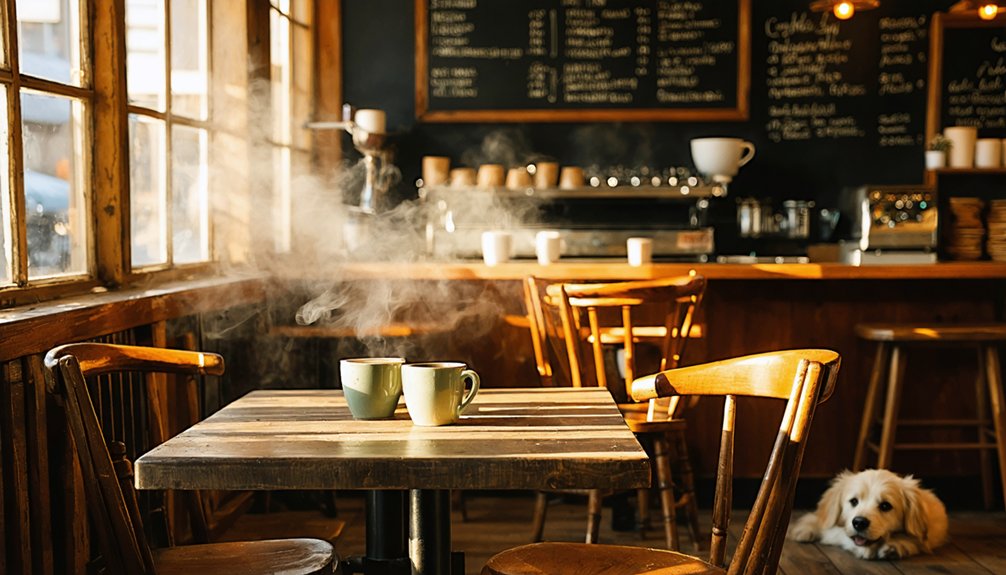
Great third places don’t happen by accident—they’re built on deliberate design choices that pull you back again and again. The best ones sit along your everyday routes, close enough to visit without planning. Inside, you’ll find seating that balances openness with shelter—spots where you can watch the room without feeling exposed.
Layouts accommodate solo visitors and small groups equally, with surfaces flexible enough for conversation, work, or a board game. Inclusive finishes and affordable offerings signal that everyone belongs here, not just regulars with money.
What truly sustains a third place is reliability—consistent hours, recurring rituals, and familiar faces who set the tone. These aren’t accidents of culture. They’re intentional structures that make returning feel less like a choice and more like coming home. Identifiable regulars provide continuity and a sense of identity that gives newcomers a reason to return.
The Best Third Places in Your Own Neighborhood
Chances are, your best third places are closer than you think. Your public library isn’t just books—it’s complimentary, accessible social infrastructure where workshops, book clubs, and community programming actively build belonging.
Your nearest park, especially within a quarter mile, delivers measurable mental health benefits and cross-community connection you can’t replicate indoors. Your corner café anchors neighborhood life through low barriers, predictable hours, and the kind of unhurried conversation that strengthens civic ties.
Look also to community centers, local faith spaces, and small businesses that host regular gatherings. These aren’t accidental amenities—they’re deliberate venues where social capital grows. When you show up consistently, you’re not just passing through. You’re investing in the connective tissue that makes a neighborhood feel like home. Rotterdam Public Library alone draws 2.6 million physical visits per year, a testament to how powerfully a library can function as a genuine community anchor.
How to Find Community When Third Places Are Scarce
When traditional third places thin out or disappear entirely, community doesn’t have to go with them. You can deliberately build it elsewhere.
Start by treating whatever physical infrastructure remains—a surviving library branch, an independent café, a public plaza—as intentional gathering ground, not just a convenience stop. Show up consistently. Bring others.
When physical options are genuinely scarce, go digital with purpose. Moderated local forums, interest-based groups, and hybrid events can generate real social capital when designed around regular interaction and shared norms.
Then go deeper: mutual aid networks and civic volunteer groups do more than fill service gaps—they build the trust and repeated contact that third places once provided organically.
Scarcity demands intention. Community still forms wherever people choose to show up for each other. Research shows the decline in third place availability has disproportionately hit majority-Black, low-educated, and rural communities, making intentional community-building especially urgent in those areas.
Third Places for Kids and Teens Beyond School
For kids and teens, school is only part of the social equation. Public libraries offer something rare—free, open access to spaces designed around adolescent growth. No fees, no gatekeeping. Just room to study, create, and connect with peers through clubs, maker tools, media equipment, and drop-in programming.
The best teen library spaces feature movable furniture, updated technology, and—critically—teen input in their design and rules. That last part matters. When young people shape their own spaces, they actually use them.
Parks extend this further. Outdoor spaces with proper seating, social nodes, and intentional programming become powerful third places for youth. If you’re raising a teenager, point them toward spaces that respect their autonomy. That’s where real community starts forming. The Internet Archive works to preserve digital cultural artifacts, ensuring that online resources young people rely on remain accessible over time.
What Cities Can Do to Bring Third Places Back
Third places don’t disappear by accident—they’re zoned out, defunded, and designed away. Cities can reverse that through deliberate, structural choices.
Mixed-use zoning opens up cafes, libraries, and civic spaces inside neighborhoods where they’ve been banned. Ground-floor activation requirements build social infrastructure directly into new developments. Streamlined licensing removes the financial gatekeeping that kills small, community-centered venues before they open.
Public investment matters too. Parks, plazas, upgraded libraries, and repurposed alleyways become genuine gathering spaces when they’re funded like the long-term community health assets they are—not trimmed at the first budget cut. Despite their contributions to innovation, economic growth, and community strengthening, many third places still operate without sufficient policy support.
Transportation ties it together. When transit routes align with third places and streets prioritize people over cars, you can actually get there. Access isn’t a bonus—it’s the whole point.
Habits That Turn Any Third Place Into Real Community
The difference between a place you visit and a community you belong to usually comes down to habit. Show up consistently—same spot, same schedule—and people begin to recognize you. That recognition matters: residents who frequent local third places and know other patrons report feeling close to their neighbors at a rate of 68%, compared to 43% among those without such places.
Don’t judge a new space after one visit. Commit to three before deciding it’s not for you.
Then contribute something small—bring food, welcome a newcomer, help clean up. These micro-acts build trust faster than conversation alone.
Finally, greet people. Adults who regularly greet five neighbors show a 60.5% probability of thriving. Research finds that more frequent interactions with neighbors lead to higher positive affect, meaning the mood benefits of local connection are real and measurable. Community isn’t stumbled into. You build it, one deliberate habit at a time.
References
- https://www.pps.org/article/roldenburg
- https://www.youtube.com/watch?v=l37HZq_DMU4
- https://www.steelcase.com/research/articles/topics/design/q-ray-oldenburg/
- https://en.wikipedia.org/wiki/Third_place
- https://plannersweb.com/wp-content/uploads/1997/01/184.pdf
- https://www.youtube.com/watch?v=BvcYQLIe_7E
- https://courier.unesco.org/en/articles/third-places-true-citizen-spaces
- https://greatgoodplace.org/
- https://pdfs.semanticscholar.org/ac5a/9d35cfc99904b8ede1f65f0ca05de64791c3.pdf
- https://en.wikipedia.org/wiki/The_Great_Good_Place_(book)